
The decision may concern further funding, a contractor, a product claim, programme risk or the credibility of a route forward.
Technical Advisory and Manufacturing Transition
Independent engineering judgment for consequential decisions, active programmes and the transition from technical work to repeatable production or operation.
Where this becomes useful
In situations where the technical position or next steps are not clear.
Documents, prototypes, tests and requirements exist, but their completeness and relationship to the intended outcome are uncertain.
Manufacturing methods, quality controls, commissioning, training and technical handover need to be specified.
The client retains its team and authority while Zambeel supplies oversight, specialist judgment or coordinated delivery capacity.
What Zambeel can own
A clear technical position and a practical route forward.
Our technical advisory engagement is built around evidence, clearly defined roles and continuity. We can work independently, alongside a client team or between the client and existing contractors.
Establish the position
Reconcile the requirement, contract, technical record, physical evidence and current work into a clear account of what exists and what remains unresolved.
Direct the next work
Define priorities, decision gates, work packages, tests, interfaces and roles around the outcome the client is trying to reach.
Protect continuity
Build the documentation, methods, supplier knowledge and team understanding needed for the programme to continue through changes in people or contractors.
Scope
Independent advisory, programme oversight and transition into operation.
The following forms of work can be commissioned independently or combined within the same programme.
Feasibility and technical definition
Turn an opportunity, requirement or technical ambition into a defensible development position before major commitments are made.
Feasibility and technical definition
The intended outcome is clearer than the route
A client knows what the product or capability must achieve but needs the architecture, constraints and principal unknowns made explicit.
Requirements, architecture and tradeoffs
Use-case study, technical decomposition, preliminary calculations, experiments, supplier research and risk-led development planning.
A basis for commitment
Defined requirements, options and exclusions, feasibility evidence, cost and schedule assumptions, risk register and proposed work packages.
Independent programme assessment
Establish what has actually been completed, how well it supports the requirement and what the programme owner should ask for next.
Independent programme assessment
Claims and evidence no longer align cleanly
Management has inherited a programme, a milestone is disputed or the available technical record does not support confident decisions.
Record review and physical verification
Cross-reference requirements, contracted deliverables, design records and test claims. Inspect and test available hardware. Identify gaps and risks.
A decision-ready technical position
Workstream findings, traceable evidence, issue and risk registers, completion requirements, continuity position and management presentation.
Contractor and R&D supervision
Give programme owners technically informed oversight without requiring them to build a complete senior hardware function in-house.
Contractor and R&D supervision
The client owns the outcome, not every discipline
Specialists and contractors are already engaged, but scope, interfaces, evidence and milestone acceptance require coordinated technical leadership.
Governance close to the engineering
Review plans and design decisions, chair technical reviews, resolve interfaces, define acceptance evidence and monitor action closure.
Visible progress and controlled decisions
Review records, decision logs, milestone criteria, technical actions, test requirements and concise reporting for management or investors.
Manufacturing transition
Carry a validated design or recovered production capability into a repeatable build, commissioning and operating method.
Manufacturing transition
A prototype is not yet a production system
The design works, but suppliers, tolerances, process controls, inspection, service information or operator readiness remain incomplete.
Make the method as deliberate as the design
DFM review, manufacturing definition, supplier qualification, fixtures and test methods, pilot-build support, commissioning and issue resolution.
A repeatable technical handoff
Manufacturing packs, approved sources, inspection and test records, process parameters, maintenance information and staff training.
Technical team development
Strengthen a client’s own engineering capacity through embedded support, methods, review structures and practical knowledge transfer.
Technical team development
The capability should remain with the client
A company is establishing a hardware function, extending into a new discipline or preparing an existing team to own later phases.
Work alongside the people doing the work
Role and workflow definition, technical mentoring, review practices, development methods, targeted training and supervised first application.
A team able to carry the work forward
Defined roles, working methods, reusable templates, technical records and demonstrated competence on the client’s real programme.
Evidence in practice
Advisory grounded in work that had to hold up physically.
These engagements span independent assessment, productisation and the transfer of technical capability into an operating organisation.
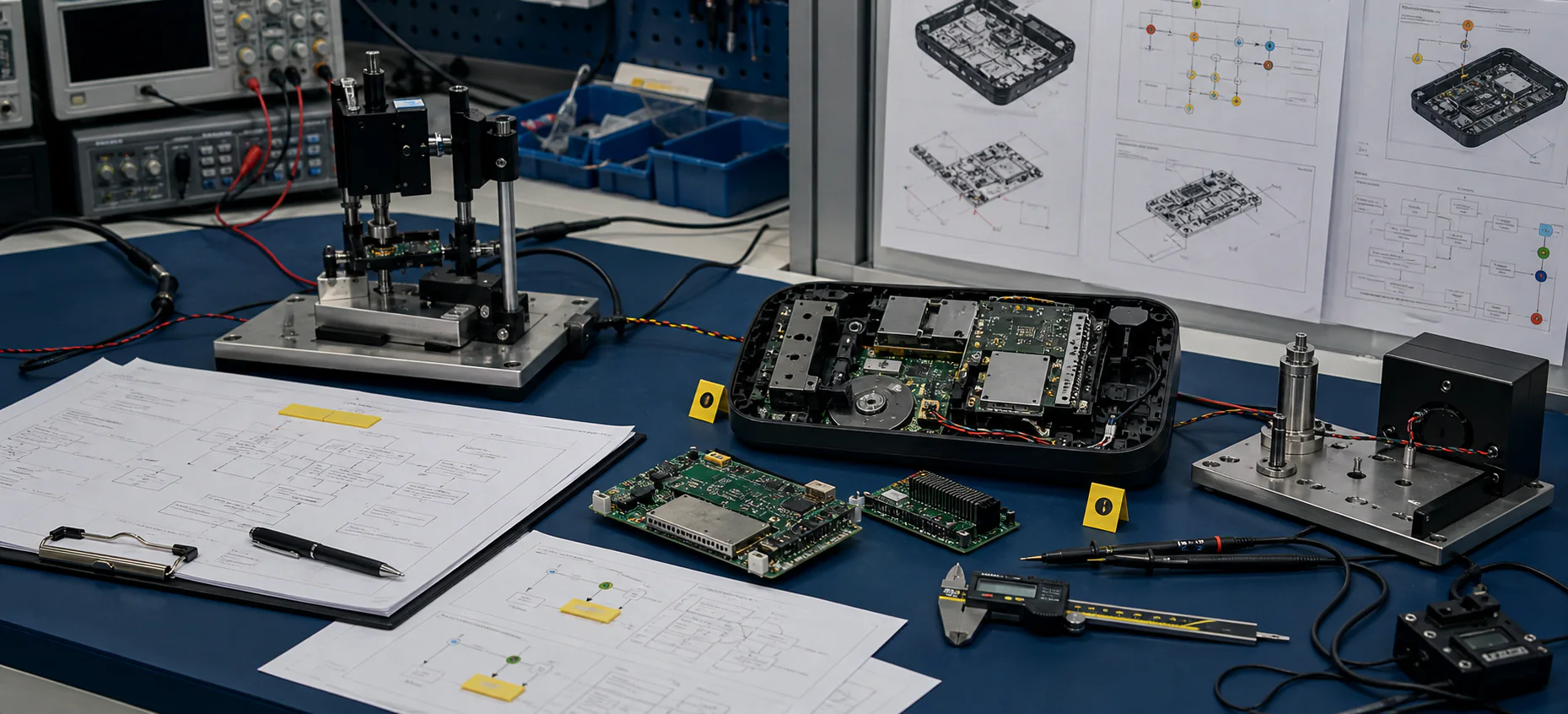
Independent assessment
An inherited hardware programme
A fragmented record and delivered prototypes were converted into a fair, evidence-led route forward.
Read case study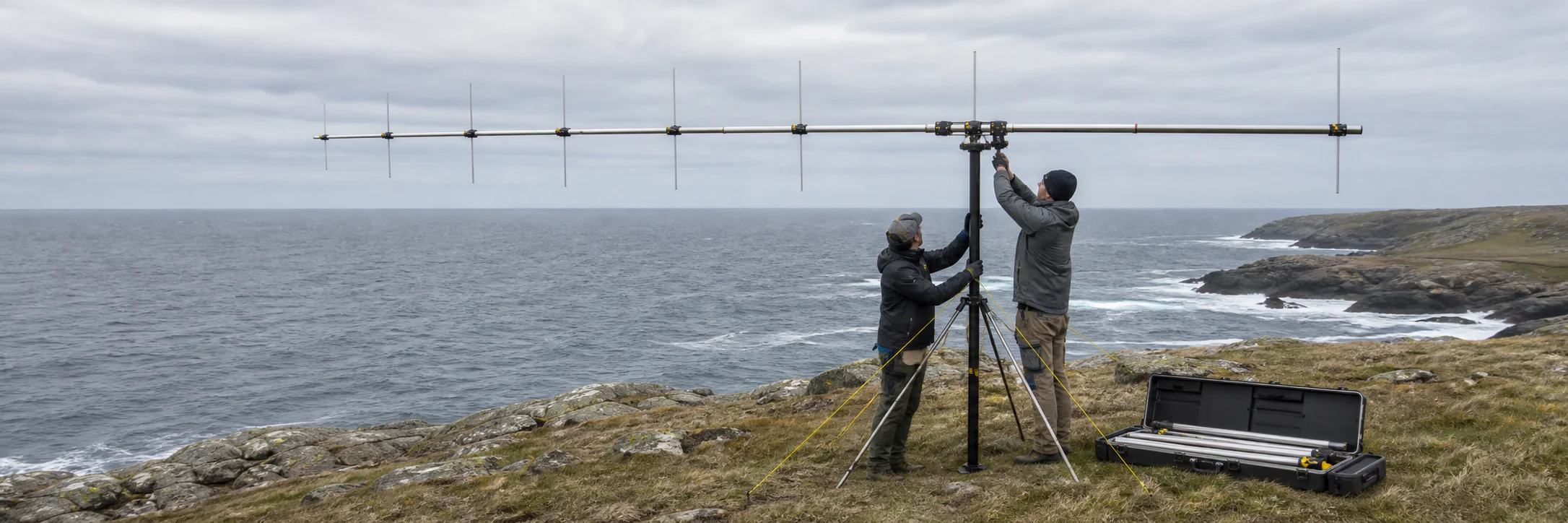
Productisation and transfer
A coastal receiving antenna
Mechanical development and validation gave the client a design it could manufacture in-house.
Read case study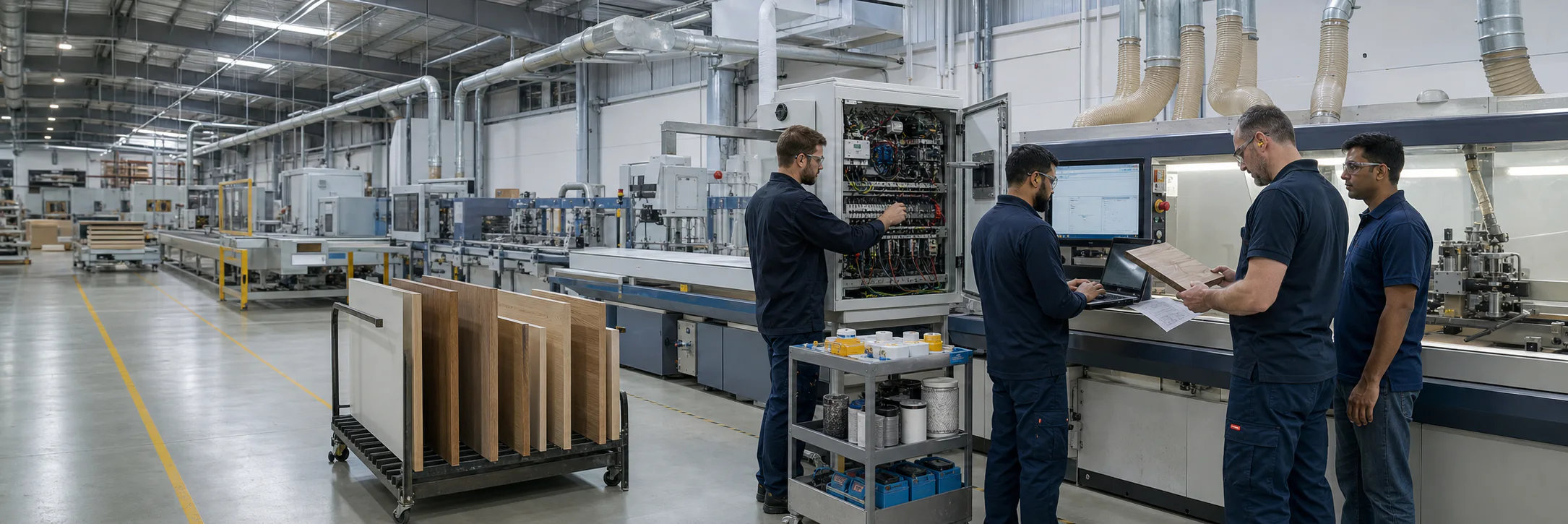
Operational transition
Kitchen, door and wardrobe production line
Recovered machinery became a documented, maintainable production capability operated by client staff.
Read case studyRelated capabilities
Advisory findings may define the need for development work or focused validation.
Discuss a requirement
Tell us what you need
Discuss an active programme or manufacturing transition.
Share the concern, decision or operating result that needs stronger technical evidence.