
Imaging, illumination, compute, communications and operator use must provide the conditions the software expects.
AI, Vision and Connected Systems
Physical sensing, intelligent methods, communications and operational software developed as one path from a real-world event to a useful decision.
Where this becomes useful
When useful intelligence depends on the complete path from the physical world.
Sensors, edge logic and communications need to observe the right event and survive the actual operating environment.
Scene understanding, datasets, spatial context and human verification must be designed around the decision rather than the technology alone.
Deployment tools, APIs, monitoring, privacy controls and administrative interfaces are needed beyond the initial algorithm.
What Zambeel can own
A complete information path, not an isolated model or sensor.
Zambeel can own the complete stack or defined layers within a client-led system. In either case, capture conditions, data, interfaces and operational use remain visible across the architecture.
Define the operational decision
Establish what must be detected, predicted, located or controlled, who will use the result and what an error means in practice.
Engineer the data path
Coordinate sensors, capture conditions, datasets, algorithms, communications and compute around representative operating conditions.
Make the system deployable
Provide the interfaces, administration, monitoring and human controls needed to operate, tune and extend the system beyond a demonstration.
Scope
Connected intelligence from physical capture to operational use.
The work can cover a complete platform or combine with client models, software, cameras, sensors and existing infrastructure.
Vision hardware and datasets
Imaging, illumination, capture conditions and representative data developed around what the vision system must see.
Vision hardware and datasets
Model performance is limited by what reaches the camera
View angle, lighting, motion, reflections, resolution, occlusion or data diversity prevent reliable inference under real conditions.
Design capture and data together
Camera and optics selection, illumination, mounting, trigger logic, capture pipelines, dataset planning, collection, labelling and quality review.
A defined visual input layer
Capture specifications, representative datasets, data provenance, quality findings, hardware settings and known visual limits.
AI models and algorithms
Purpose-built methods for detection, segmentation, classification, scene understanding and operational decision logic.
AI models and algorithms
The decision needs more than an off-the-shelf model
Scene context, operating cost, error balance, explainability or deployment constraints require a method tuned to the actual use case.
Baseline, train and analyse errors
Model and method selection, training, evaluation design, error analysis, threshold and rule development, optimisation and deployment experiments.
Performance tied to representative data
Versioned models or algorithms, evaluation sets, metrics, error cases, operating thresholds and explicit limits of demonstrated performance.
IoT and communications
Sensing and actuation nodes connected through protocols chosen for range, power, latency, environment and failure behaviour.
IoT and communications
Physical state must travel reliably through the system
Battery life, range, interference, loss of connectivity, installation constraints or safe fallback behaviour shape the architecture.
Nodes, protocols and supervised behaviour
Sensor and actuator architecture, low-power operation, wired and wireless interfaces, message design, gateways, diagnostics and fault handling.
A tested communications architecture
Interface definitions, message formats, power and range data, loss and recovery behaviour, logs, firmware integration and field-test results.
GIS and spatial interfaces
Operational data placed into maps, scenes and location-aware interfaces that support navigation, onboarding and management.
GIS and spatial interfaces
The result only becomes useful in spatial context
Users need to locate assets, navigate to a condition, understand coverage or configure how physical scenes relate to a site.
Connect scene, map and operator judgement
Spatial data models, map interfaces, site onboarding, geolocation methods, camera or sensor placement, route integration and human verification tools.
A controlled spatial operating layer
Geospatial data, onboarding workflows, verified locations, map and scene interfaces, operator actions and accuracy findings.
Cloud, VPS and applications
APIs, deployment infrastructure and user-facing tools that make intelligent physical systems operable and maintainable.
Cloud, VPS and applications
A pilot needs operational control around the algorithm
Users need secure access, APIs, configuration, monitoring, administration, privacy controls or local connection to existing equipment.
Build the operating and deployment layer
Containerised services, cloud or VPS deployment, APIs, databases, dashboards, administrative tools, local connectors, logging and monitoring.
A platform that can be operated and extended
Deployed services, interface documentation, administration workflows, monitoring, access controls, deployment records and support tools.
Evidence in practice
Connected products that joined physical conditions to operational decisions.
The evidence separates complete Zambeel-developed intelligence from projects where we supplied hardware and interfaces around a client’s AI software.
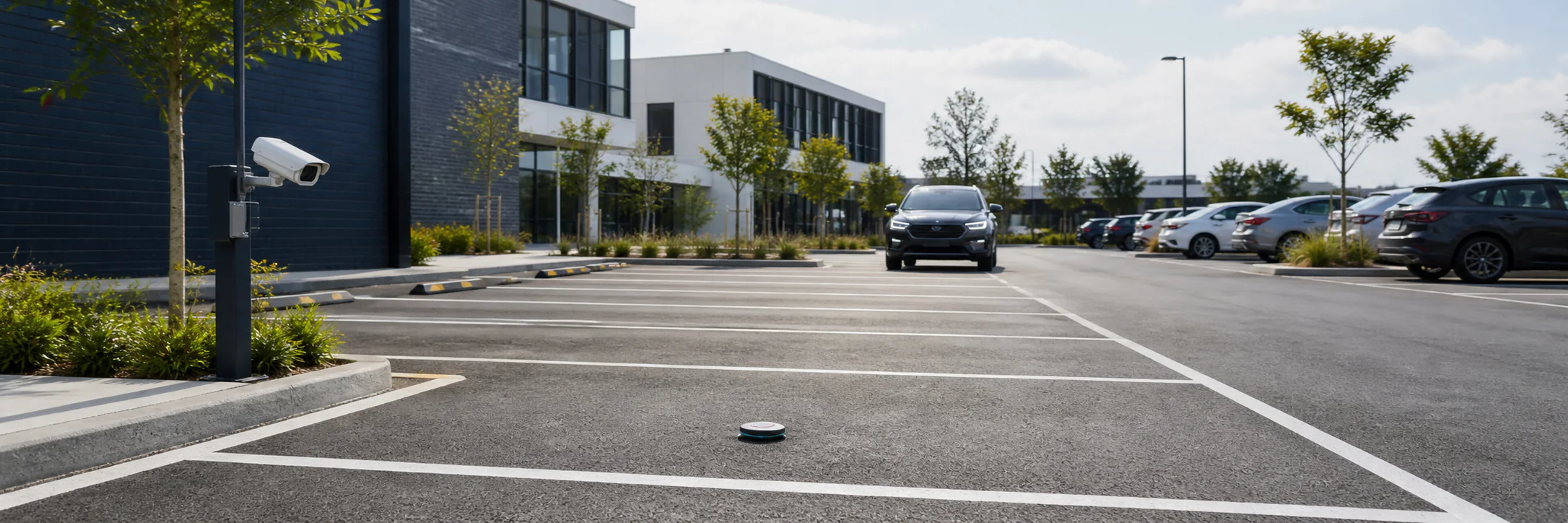
Vision · Models · GIS · Cloud
Parking intelligence
Zambeel developed the datasets, vision methods, spatial onboarding and platform used to localise vacant parking.
Read case study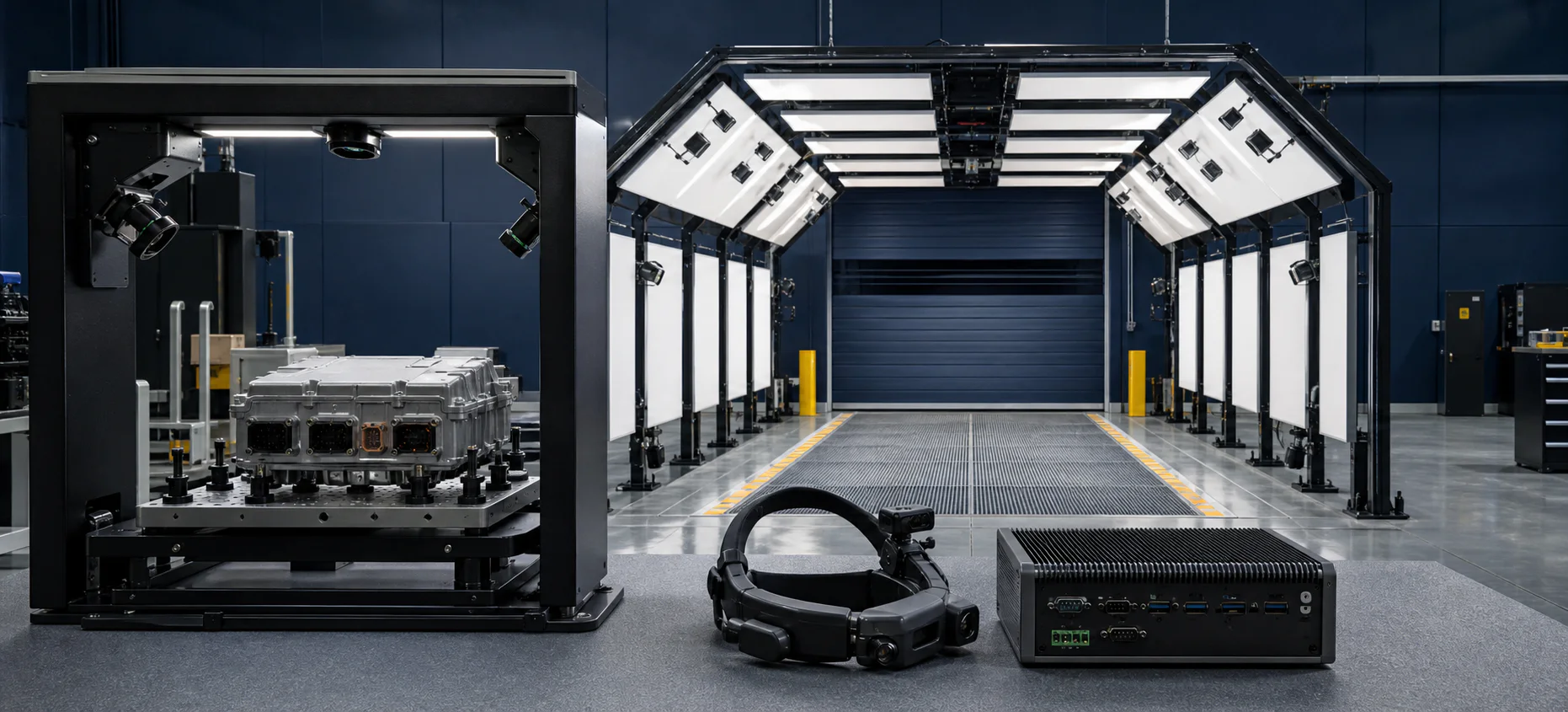
Capture hardware · Interfaces · Edge compute
Industrial-vision hardware
Imaging, lighting and connected equipment were tailored to AI software owned and developed by the client teams.
Read case study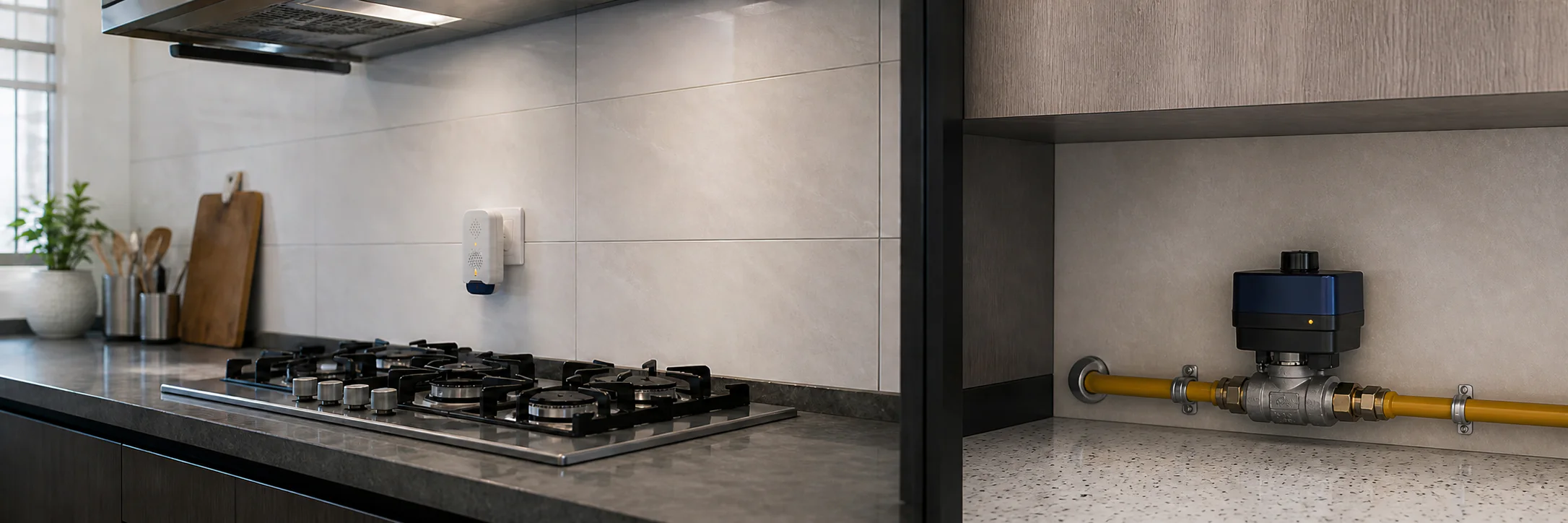
IoT · Low power · Supervised actuation
GaSafe
Independent sensing nodes and a fail-safe actuator communicated over a purpose-built low-power network.
Read case studyRelated capabilities
Intelligent systems are strongest when their physical and operational layers remain close.
Discuss a requirement
Tell us what you need
Discuss an intelligent system built around the physical world.
Share the event the system needs to observe, the decision it should support and the environment in which it must work.