Sensing near the hazard
Gas and fire sensing is most useful near stoves, heaters and other likely sources, where mains power, neat cable routes or a dependable network connection may not be available.

A Zambeel-originated safety system linked gas and fire sensing near potential hazards to automatic supply isolation, without requiring control wiring across an existing home or commercial kitchen.
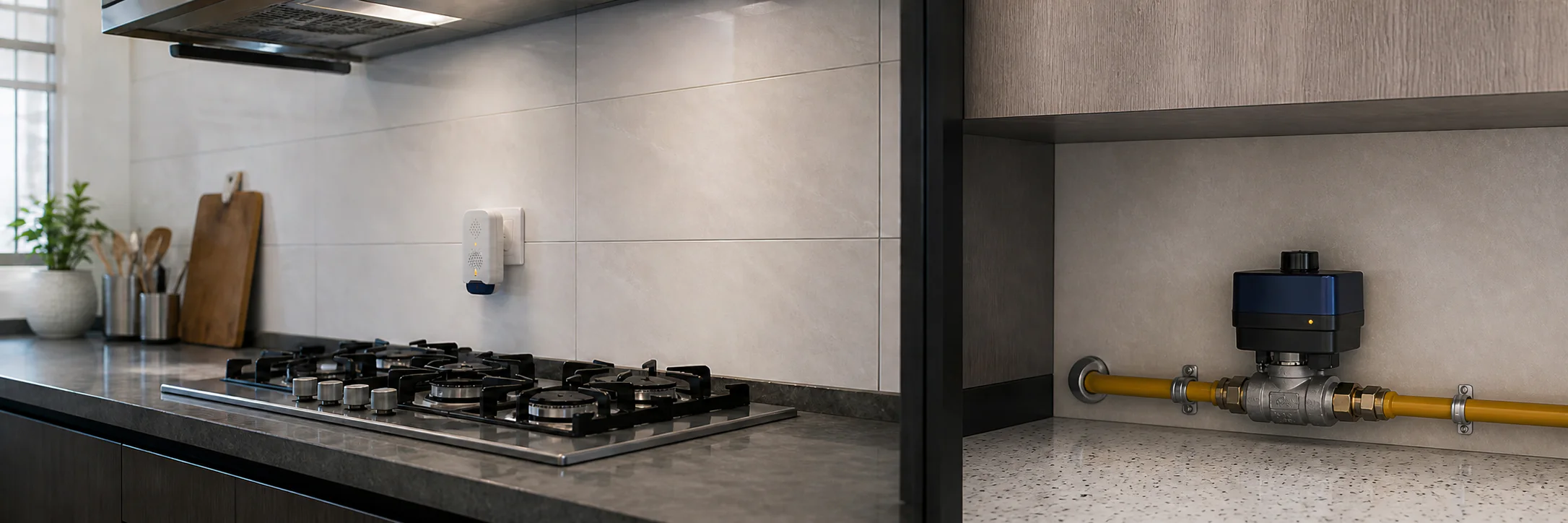
Zambeel originated the product and carried sensing, controls, physical actuation and validation into an integrated, field-tested prototype.
How engagements workThe problem
Gas leakage and fire can escalate while a building is unoccupied, while people are asleep or before someone reaches the supply valve. Automatic isolation addresses that second part of the problem, but retrofit installations often place the sensors and shutoff point far apart.
Gas and fire sensing is most useful near stoves, heaters and other likely sources, where mains power, neat cable routes or a dependable network connection may not be available.
The shutoff mechanism belongs at the incoming supply, cylinder outlet or branch line. Connecting it to several sensing positions can otherwise turn a safety retrofit into a disruptive wiring project.
System architecture
The architecture combined sensing nodes placed around the property with an actuator node at the supply. Its own low-power radio network carried hazard status, control messages and a continuous indication that each node remained available.
Nodes were developed for natural gas, LPG and fire detection, with battery-powered and later plug-in arrangements for different installation conditions.
Long-range low-power communication removed dependence on WiFi, internet availability and new control wiring across the site.
Scheduled messages carried safety status and confirmed node health. Remaining nodes could indicate when one unit required battery attention.
A latching valve assembly closed on a hazard command and was designed to return to its safe state if the actuator lost power.
Fail-safe behaviour
A distributed safety system cannot assume that silence means everything is normal. The communication protocol therefore used each scheduled message as both operating data and a heartbeat.
If a sensor stopped reporting, other powered nodes indicated the condition. If the battery was not replaced within the defined period and the condition was not deliberately overridden, the actuator isolated the supply.
The selected valve was latched rather than held open continuously by electrical power, reducing steady energy demand at the actuator.
Stored energy in the actuator circuit provided the closing pulse when incoming power failed, allowing the normally closed valve mechanism to return to its safe state.
Energy management
The radio sequence was designed so sensing nodes could spend most of their time in low-power states while still reporting quickly enough for safety supervision.
Transmit timing balanced response, heartbeat supervision and radio energy use across multiple sensors connected to one actuator.
The unit completed a six-month uninterrupted battery test. Measured consumption over that period supported a projected operating life of at least one year.
A later sensing node used a wall socket where power was readily available, reducing battery size and routine battery replacement.
Validation
Zambeel developed purpose-built rigs and repeatable methods for the individual functions. Prototypes were then tested in actual homes to evaluate the system under realistic conditions.
Gas and fire sensing behaviour was exercised on controlled rigs and through supervised live tests using the intended sensor arrangements.
Node-to-actuator links were tested across large residential properties and through the layouts and building materials encountered in actual installations.
Valve operation, repeated closure, lost communication, low battery indication and power-loss shutdown were included in the verification programme.
Programme outcome
In 2023, GaSafe secured the World Bank-supported HEC Innovator Seed Fund award in the emerging technologies category.
Our project team completed the planned work in 10 months of the 12-month grant period and demonstrated the working system to the grant committee at its final review.
The next phase was defined around manufacturing development and complete-system certification with an external testing partner.
Capabilities involved
GaSafe required decisions across electronics, embedded behaviour, power, mechanical integration, operator understanding and safety-state design to remain coherent at system level.
Retrofit use cases, node roles, status indication and forms suitable for domestic and commercial-kitchen environments.
ExploreGas and fire sensing, PCB development, valve actuation, stored-energy closure and complete-system integration.
ExploreLow-power radio, node scheduling, heartbeat supervision, fault handling and actuator control logic.
ExplorePurpose-built test rigs, sensor response methods, range testing, failure-state verification and residential trials.
ExploreRelated work

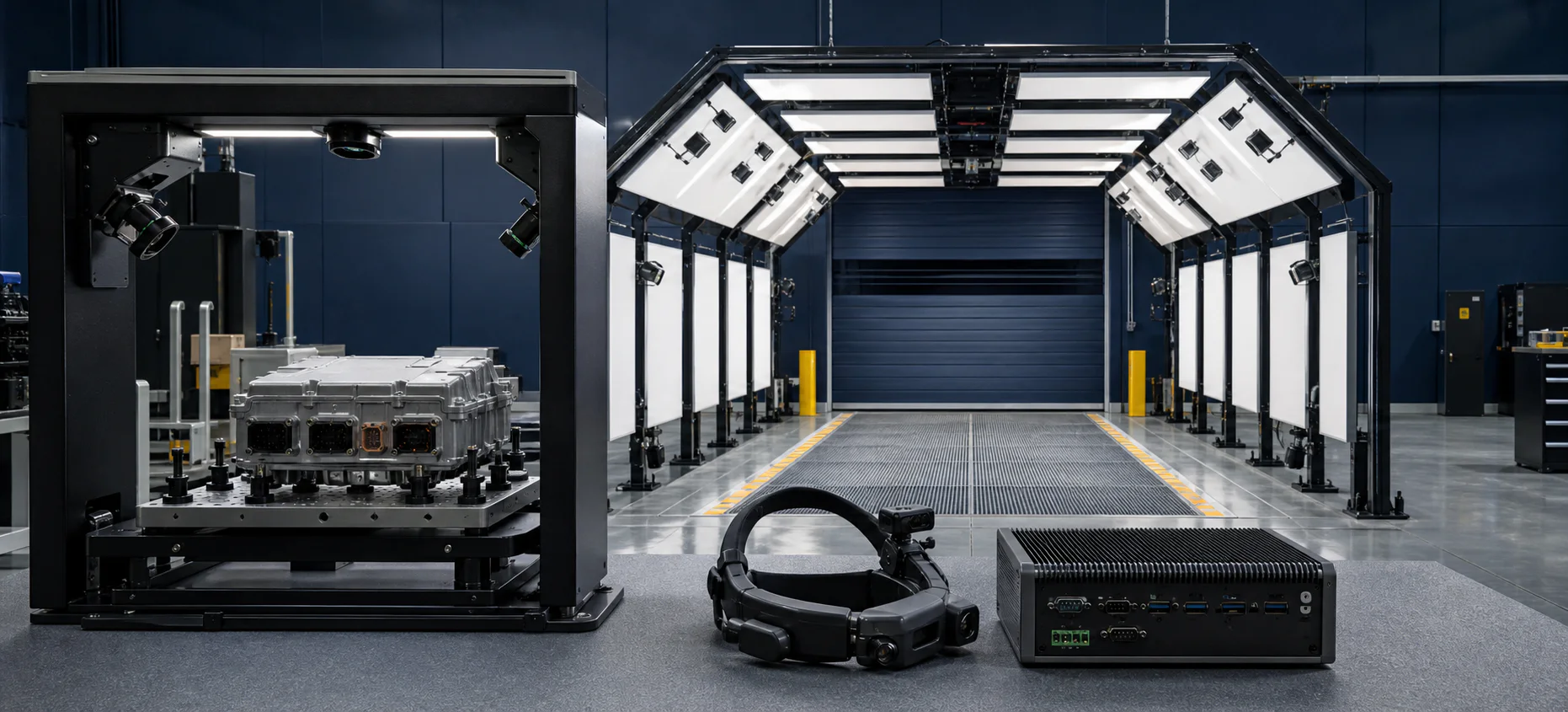
We can help shape the sensing, control, power and validation architecture around a real safety situation.