
A focused build or experiment can establish feasibility before the programme commits to a complete prototype.
Prototyping, Test and Validation
Physical builds, engineering analysis and controlled tests that turn development uncertainty into evidence for the next technical or commercial decision.
Where this becomes useful
When progress depends on evidence, not another design opinion.
The build must prioritise the functions and evidence that matter without disguising what remains unresolved.
Analysis, instrumentation and controlled tests are needed before another iteration or manufacturing commitment.
The programme needs physical inspection, repeatable methods and evidence traced back to the agreed requirements.
What Zambeel can own
The smallest useful build, followed by evidence that can be trusted.
A prototype is defined by the question it must answer. Zambeel can own the build, the method, the instrumentation and the interpretation needed to make that answer useful.
Define the question
State the uncertainty, decision and acceptance criteria before selecting the fidelity, material, method or completeness of the build.
Create controlled evidence
Combine fit-for-purpose hardware, instrumentation, methods and records so results can be repeated and challenged.
Carry learning forward
Convert findings, failures and measured limits into design actions, revised requirements and readiness decisions for the next phase.
Scope
Evidence from focused builds through field validation.
The work can begin with a single uncertain interface and continue through system prototypes, controlled validation and field evidence.
Rapid and functional prototypes
Purpose-built prototypes that answer a defined question about feasibility, function, integration or use.
Rapid and functional prototypes
A decision does not require the whole product
One mechanism, interface, sensor arrangement or operating sequence must be proven before the team invests in complete hardware.
Select only the fidelity the question needs
Proofs of principle, breadboards, mock-ups, functional rigs, subsystem prototypes and integrated demonstrators built around explicit assumptions.
A result with visible limits
Build records, observations, measurements, unresolved items and a clear recommendation for the next design or prototype.
FDM and fabrication
Prototype parts and assemblies produced with process choices tuned to strength, weight, finish, time and test purpose.
FDM and fabrication
The build method affects what can be learned
Orientation, layer strategy, material, support, infill, machining or assembly choices influence strength, accuracy, mass, finish and lead time.
Process planning around the prototype purpose
FDM process development, engineering polymers, print optimisation, CNC and EDM coordination, sheet and frame fabrication, finishing and assembly.
Parts made for the intended test
Process records, material and orientation decisions, measured parts, weight and build-time data, assembly findings and revised production files.
Engineering analysis
Calculations and simulations used to narrow design choices, predict limits and direct physical testing.
Engineering analysis
The design space is too costly to explore physically
Loads, vibration, heat, airflow, optics, power, tolerance or weight need to be understood before committing to parts and test hardware.
Models tied to measurable conditions
First-principles calculations, structural, thermal and vibration studies, power and weight estimates, tolerance work and sensitivity analysis.
Predictions that inform the test plan
Models, assumptions, operating envelopes, sensitivity findings, design recommendations and conditions to verify physically.
Test rigs and methods
Fixtures, instrumentation and repeatable procedures developed around the performance or failure mode that must be measured.
Test rigs and methods
A result must be repeatable and comparable
Ad hoc observations cannot distinguish design improvement, test variation, component spread or environmental effects.
Design the measurement with the rig
Fixture and load design, sensor selection, calibration approach, data capture, cycles, environmental conditions, safety and test procedures.
A traceable test record
Rig drawings, methods, calibration information, raw and processed data, images or video, results, anomalies and conclusions.
EVT, DVT, PVT and field trials
Development-stage validation planned around maturity, risk and the evidence required before the programme moves forward.
EVT, DVT, PVT and field trials
The next phase needs an explicit readiness decision
Engineering, design, manufacturing or field assumptions must be closed at the appropriate maturity before further commitment.
Plan evidence around development maturity
EVT, DVT and PVT planning and support, requirement traceability, issue management, pilot builds, environmental testing and supervised field trials.
A defensible maturity position
Stage plans, test reports, issue and action records, requirement status, build findings, field observations and readiness recommendations.
Evidence in practice
Development programmes where the next step depended on physical evidence.
The work spans long-duration safety trials, environmental and field validation, and an extreme-output demonstrator developed through instrumented thermal and optical testing.
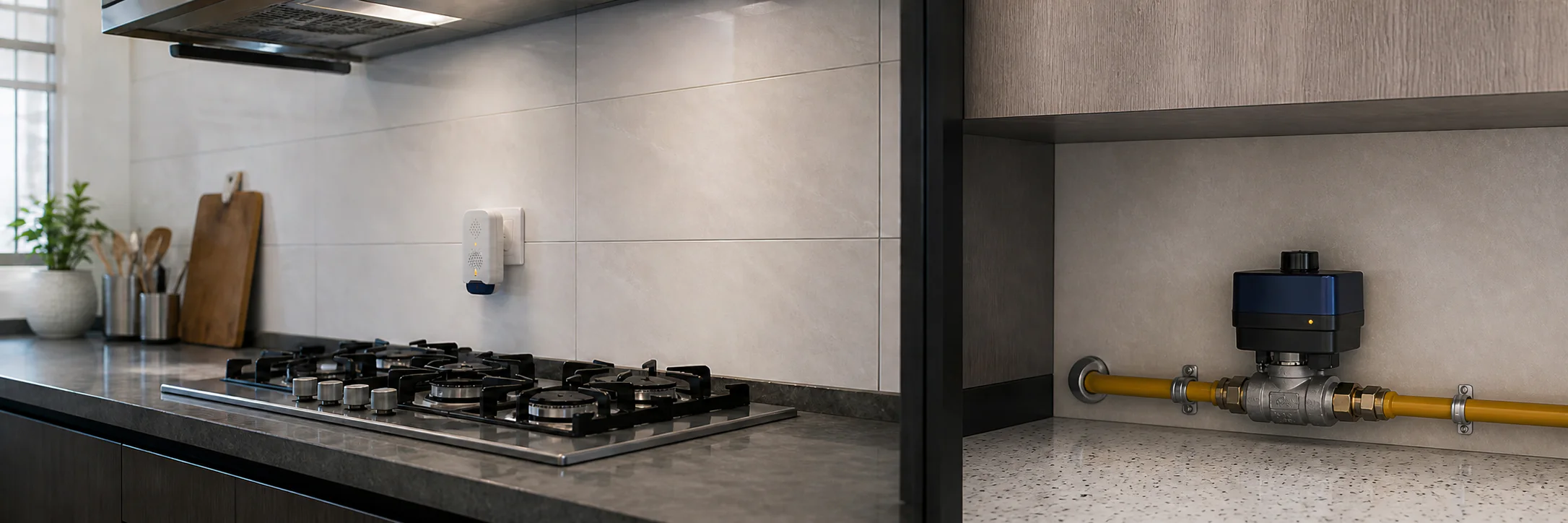
Test rigs · Failure states · Field trials
GaSafe
Sensor response, radio range, supervised shutoff behaviour and battery life were tested on rigs and in actual homes under realistic conditions.
Read case study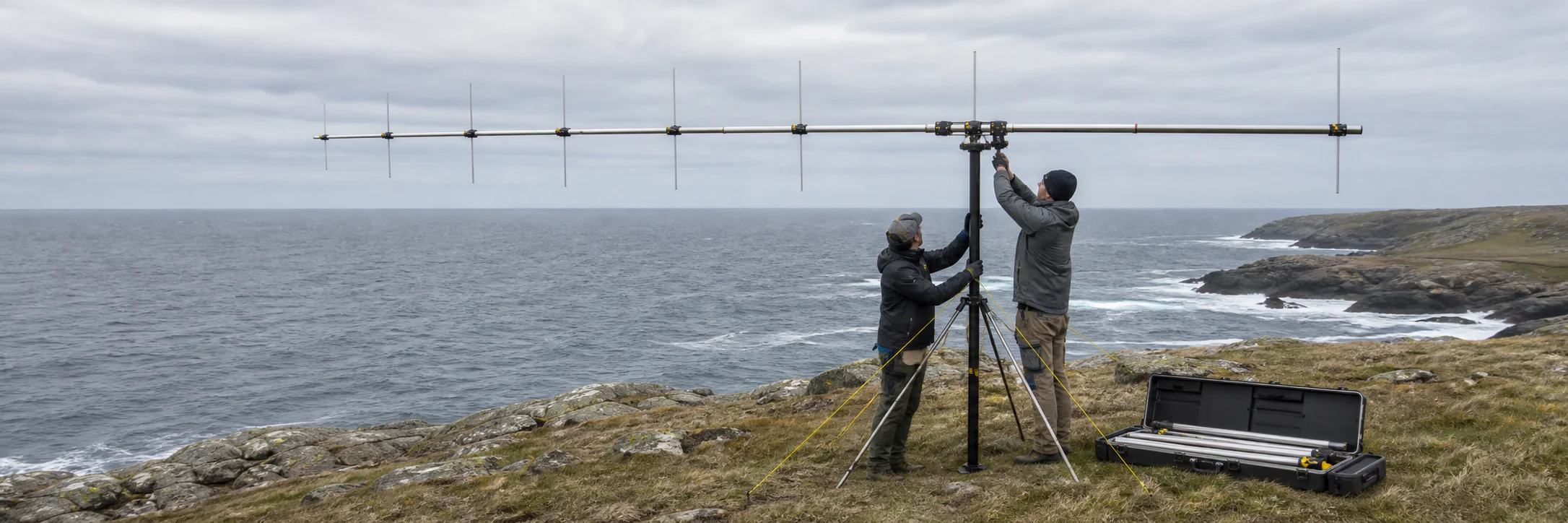
Unit tests · Environment · Field validation
Coastal receiving antenna
Interfaces, folding, wind limits and materials were developed in units before complete build and coastal field trials.
Read case study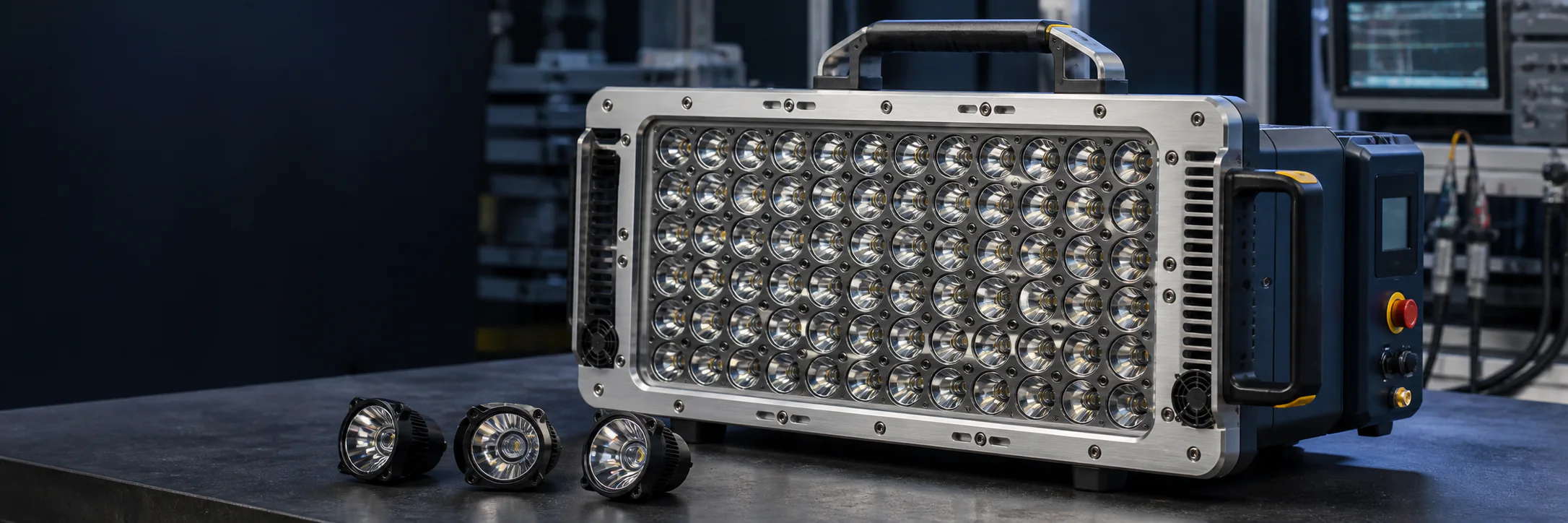
Fabrication · Instrumentation · Performance
Portable Sun
Custom thermal and optical hardware was iterated through simulation, temperature arrays and measured beam testing.
Read case studyRelated capabilities
Evidence is strongest when product intent and engineering remain close.
Discuss a requirement
Tell us what you need
Discuss the uncertainty that is holding a decision back.
Share the question the build or test needs to answer and the evidence required to move forward.